Postcard from Oslo
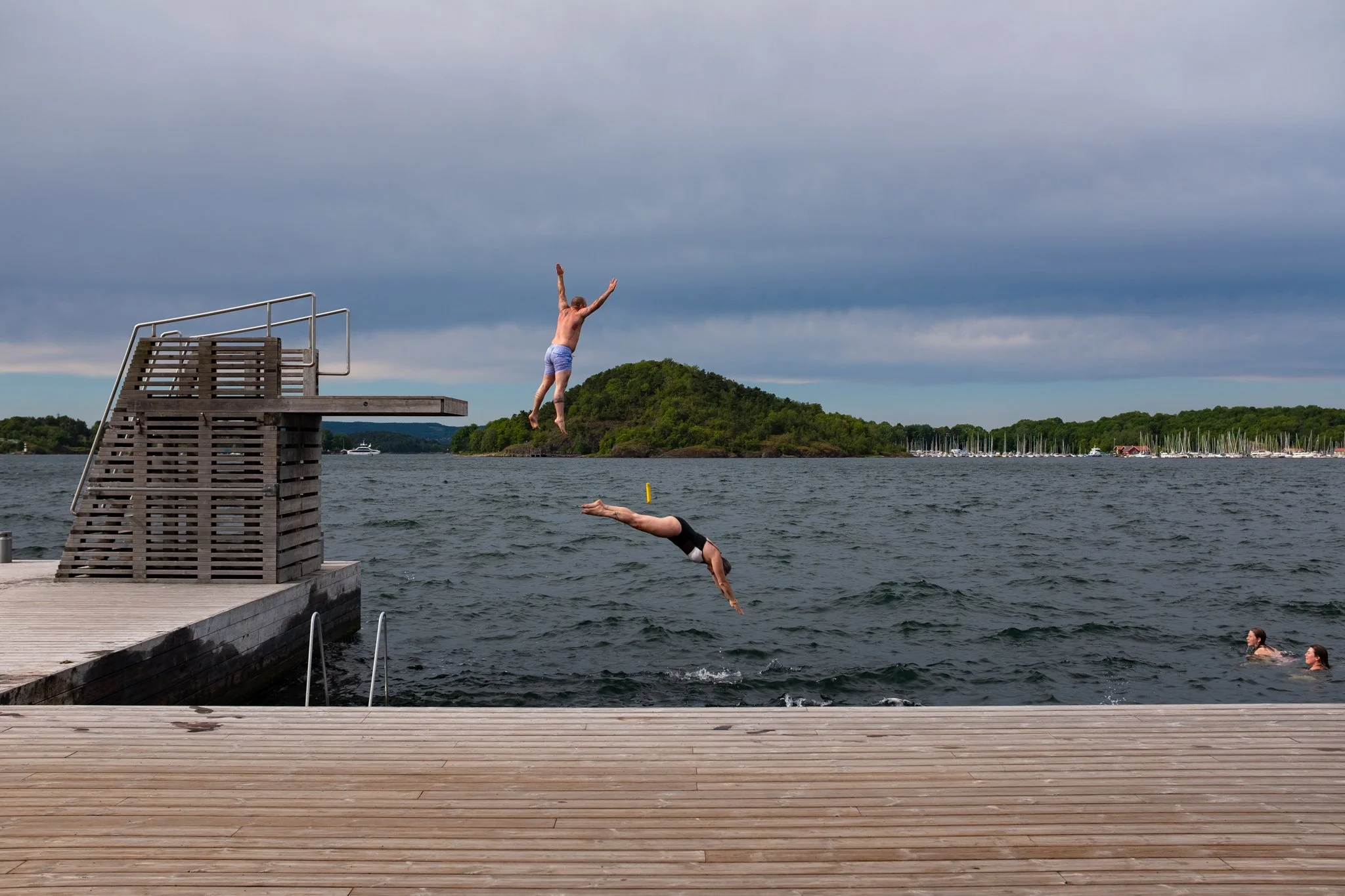
Diving into the Oslofjord at Sørenga
As I hover at the edge of the wooden decking, beneath my feet the glittering, inky waters of the Oslofjord slap against the barnacle-encrusted walls of the bathing platform. I take in the vista before me. Against a backdrop of green hills and mountains is a small, forested island, a flotilla of boats bobbing in the small harbour beyond, a gargantuan cruise liner has docked and the faint clatter of the port reverberates across the water.
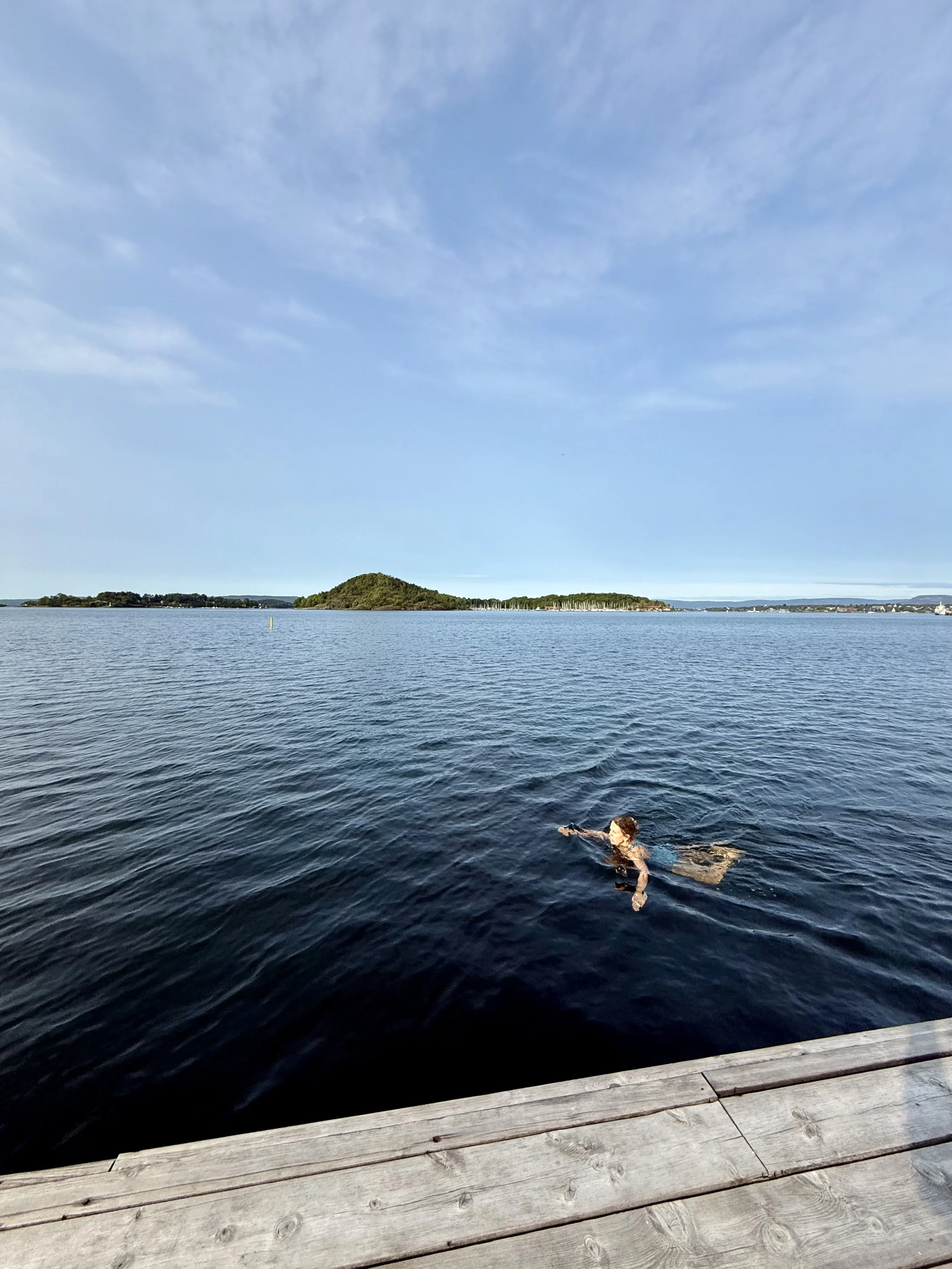
Swimming in the Oslofjord at Sørenga
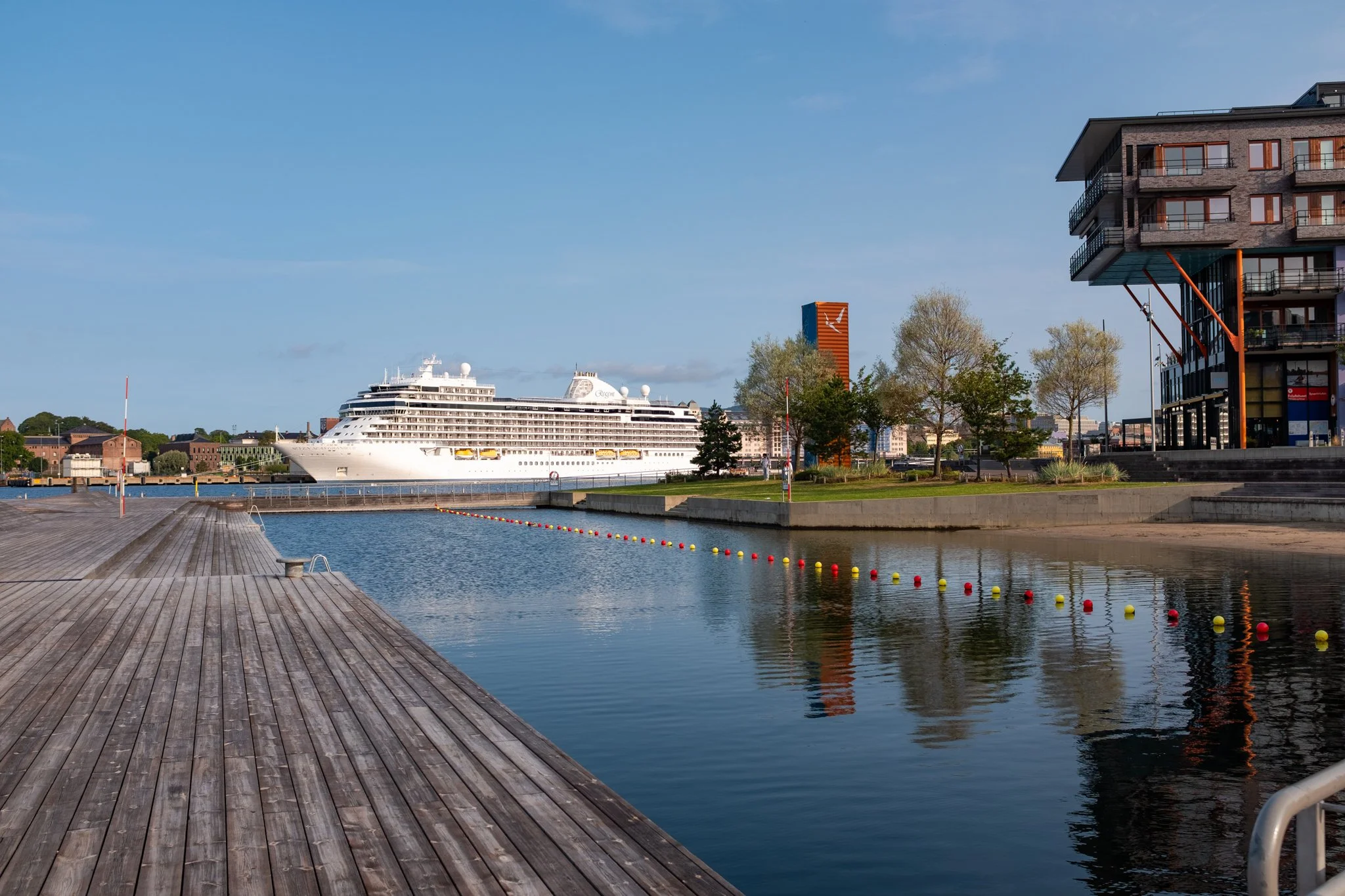
Sørenga Seawater Pool and sand beach
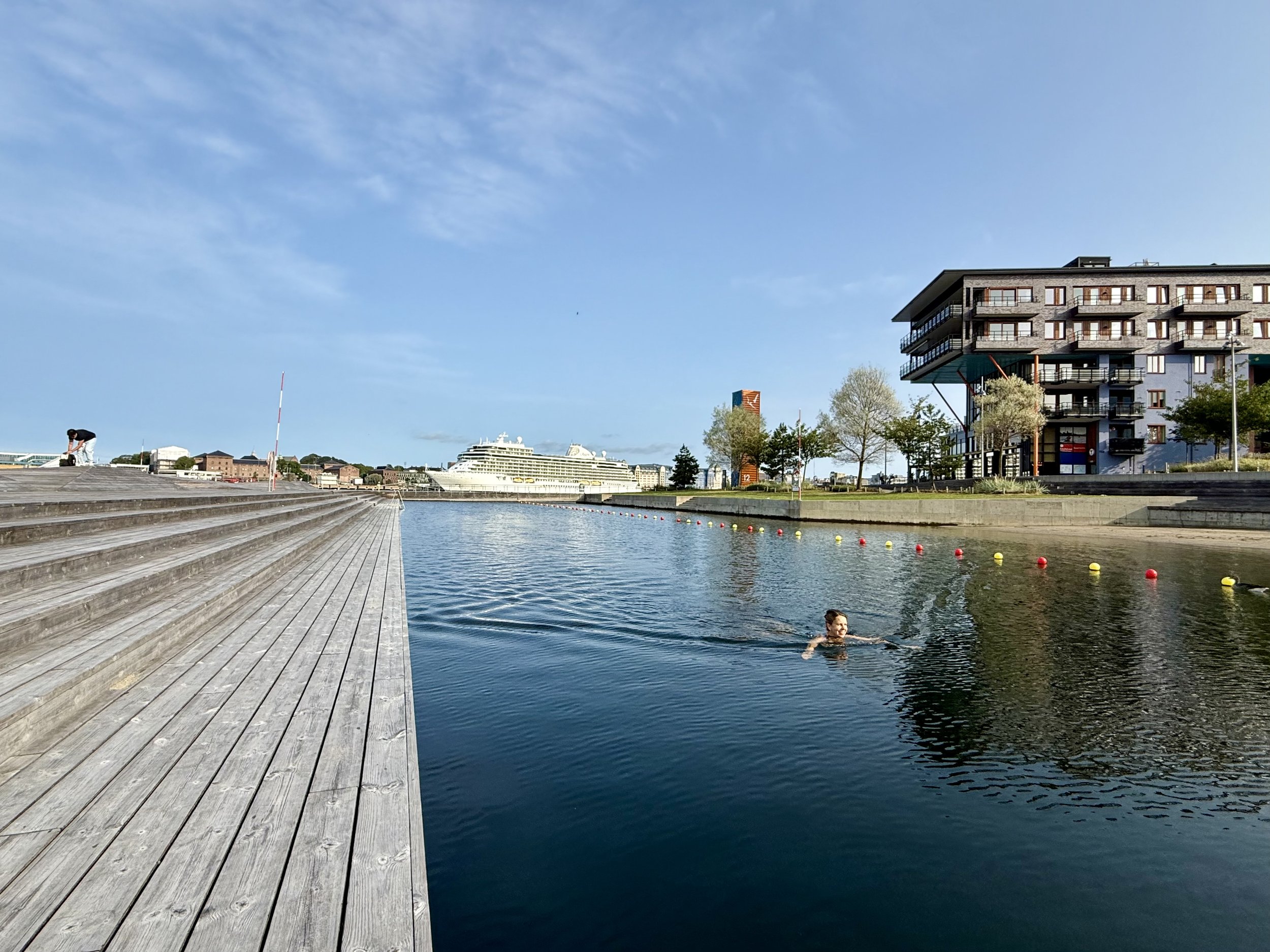
Morning swim in the Sørenga Seawater Pool
I think how different this place is compared to my usual wild swimming spots back home. The inner Oslofjord is a long, deep, narrow body of water that extends so far into the city of Oslo that it is now the local swimming pool for residents and visitors to the Norwegian capital.
I recall a chance meeting with a Norwegian couple whilst hiking on the North York Moors a couple of years ago. It turned out he was one of the architects who had transformed his home city, turning its face towards the fjord. Ever since that encounter, Oslo has been on my travel wish list. My last visit to the city was more than 25 years ago when I spent a week working at Oslo National Theatre on a production of Ibsen’s Peer Gynt. Standing here at the Sørenga Seawater Pool, I can appreciate how the architects’ project has re-shaped the waterfront, bringing the fjord into the heart of the city.
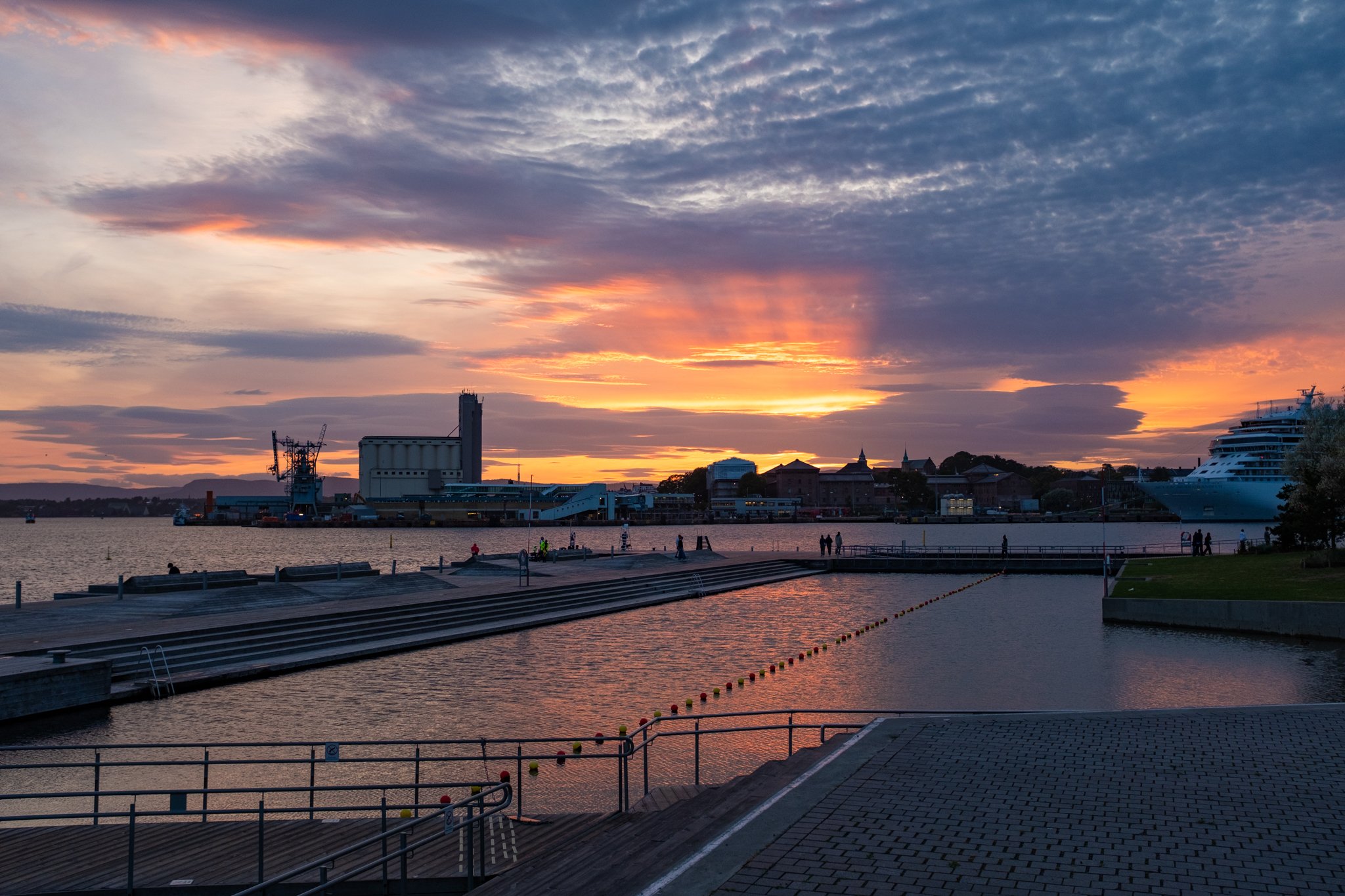
Sunset at Sørenga Seawater Pool
Sørenga was once a container dock for Oslo and is now the city’s hip new waterfront district. Apartments, cafés and restaurants have sprung up in the past decade; the showpiece is this seawater pool and bathing area with a small, sandy beach, a stepped wooden jetty, ladders into the fjord, a pool for lane swimming and diving boards.
It is a sunny weekday in August so I am surprised to see only a handful of other swimmers and bathers here. An American woman beckons me into the water. “It’s wonderful!”, she shouts. I ask what the temperature is. She answers in Fahrenheit - 60 °F (that’s just under 16 in celcius). I never actually find out the real temperature as others offer up higher readings - it could be anything between 16 and 22 °C.
I grab the top of the metal ladder, lower myself into the water, front first, then propel myself forward, gliding across the water. It’s that Goldilocks temperature summertime swimming in the Northern Hemisphere brings, not too hot, not too cold. Oscillating between a few strokes and floating, I gaze around me. I am a tiny speck floating in a gigantic swimming pool, dwarfed by my urban surroundings and the expanse of rippling sapphire water encircling me. It feels awesome.
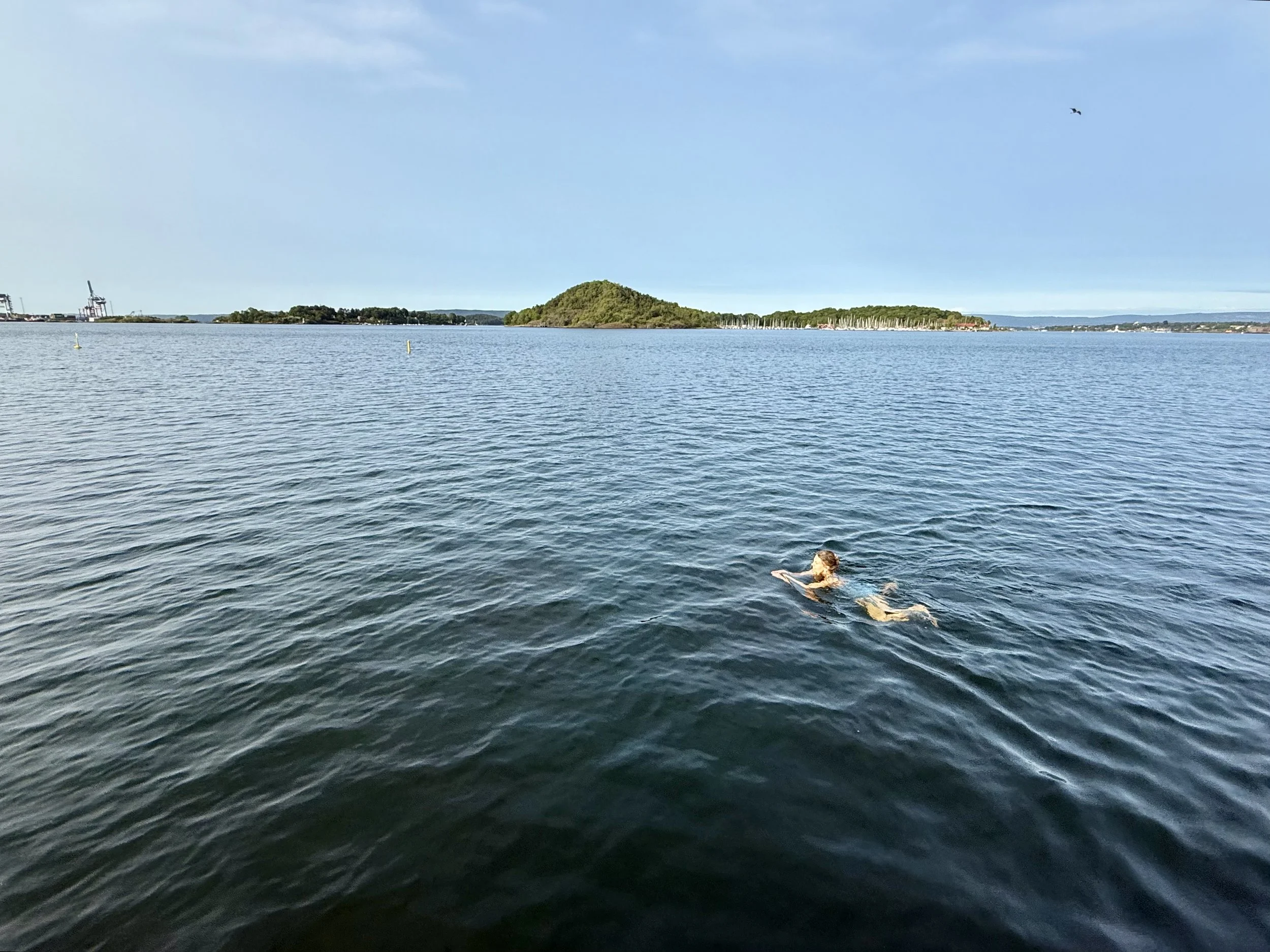
A tiny figure in the Oslofjord
One thing I can’t quite believe is that all of this is free. No tickets, no queues, and most conspicuously, no signs warning of the dangers of swimming in cold water. ‘Cold Water Kills’, ‘No Swimming’, ‘Deep Water, Keep Out’. Intimidating signage that features beside most large bodies of water in the UK, is distinctly absent here in Norway. I wonder if it is something to do with personal responsibility. The infrastructure is in place for bathing, swimming and diving but it is up to the individual to make the decision as to whether it is safe to do so. It seems a more effective and sensible approach to water safety.
Sørenga is part of the wider Bjørvika district and our base in Oslo for this trip. Construction work is ongoing and with its ever-changing skyline, several of the city’s contemporary cultural buildings are sprinkled across the area, including the Munch Museum, the Opera House and the Deichman Library, each offering sweeping views across the Oslofjord.
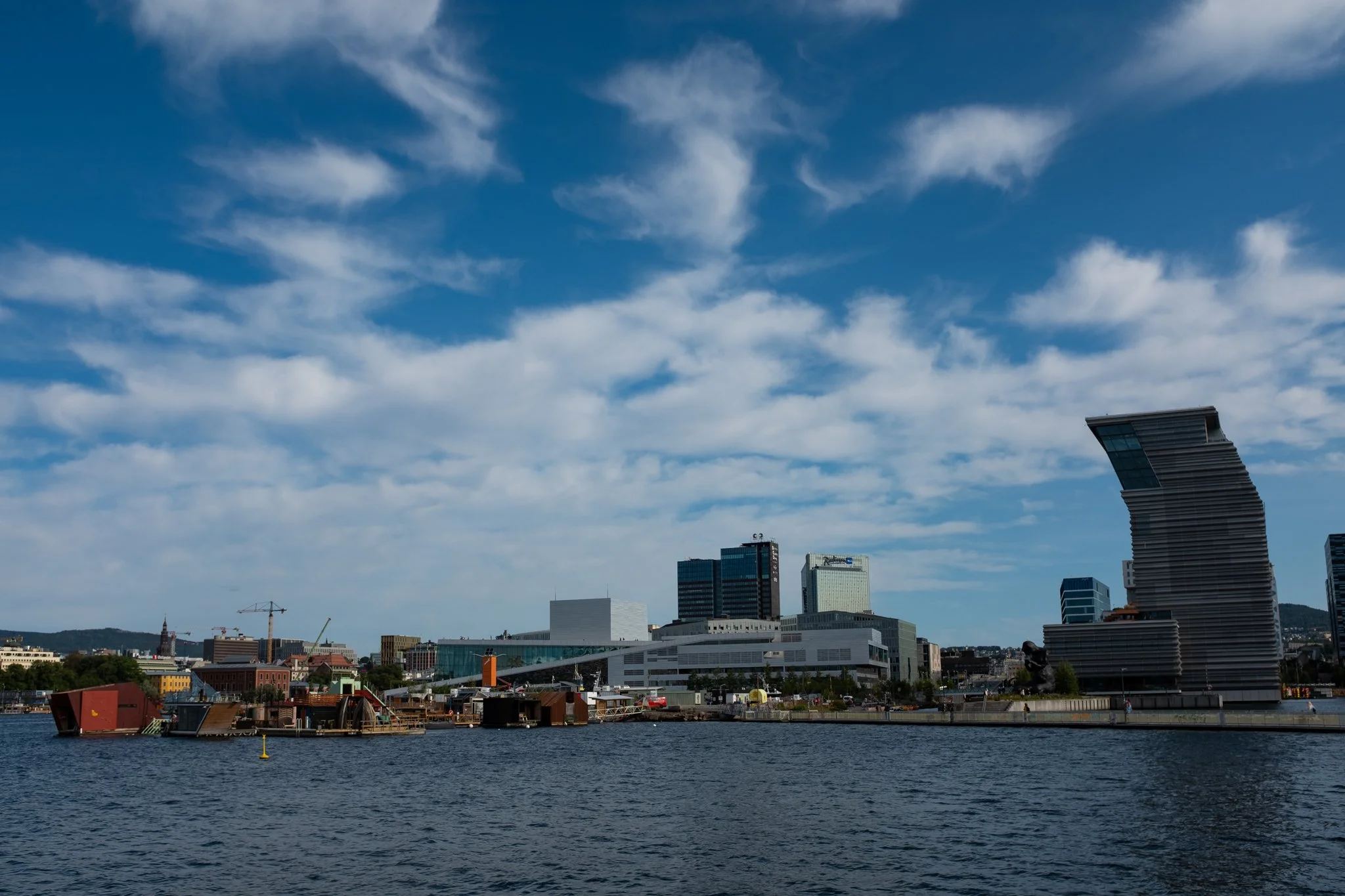
The Oslo skyline with the floating saunas, The Munch Museum and Opera House
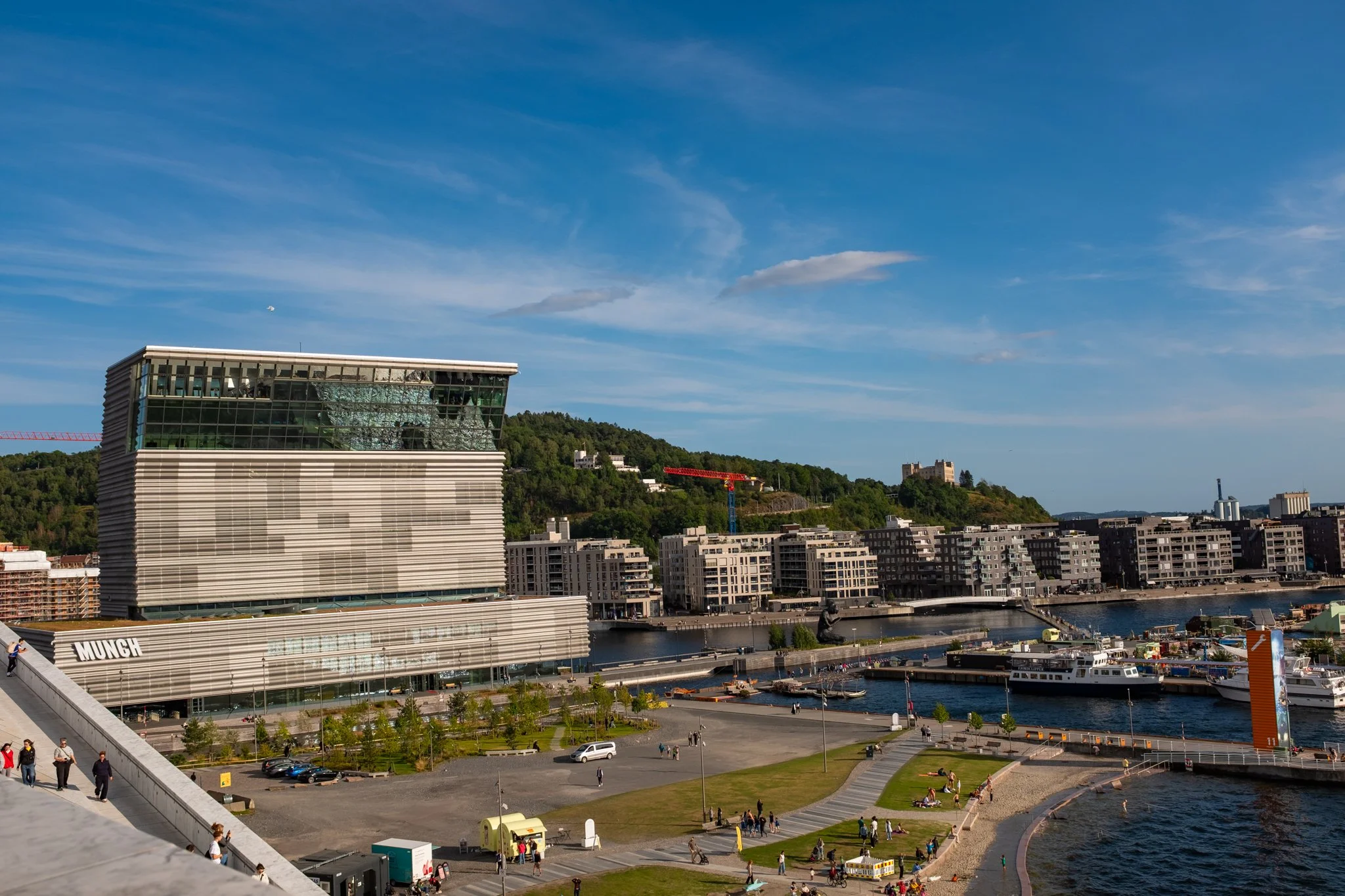
The Munch Museum from the roof of the Oslo Opera House
At the end of a suspended bridge is the Oslo Badstuforening, a quirky collection of floating saunas. We book ourselves a slot and spend 90 minutes sizzling by the hot coals in different saunas then slick with sweat, we leap into the bracing, blue-green cavern of the Oslofjord. My sons give each of the saunas a nickname - rustic (crafted from driftwood), silent one (no talking), chamber (small one) and favourite (nice views of Bjørvika). Some of them are motorised, allowing you to set off around the fjord while working up a sweat. Unsurprisingly, there are no health and safety waivers to complete before our session. We emerge re-energised, fizzing with endorphins, our skin tingling, salt-licked and pink as prawns. We love it so much we do it all again the next day.
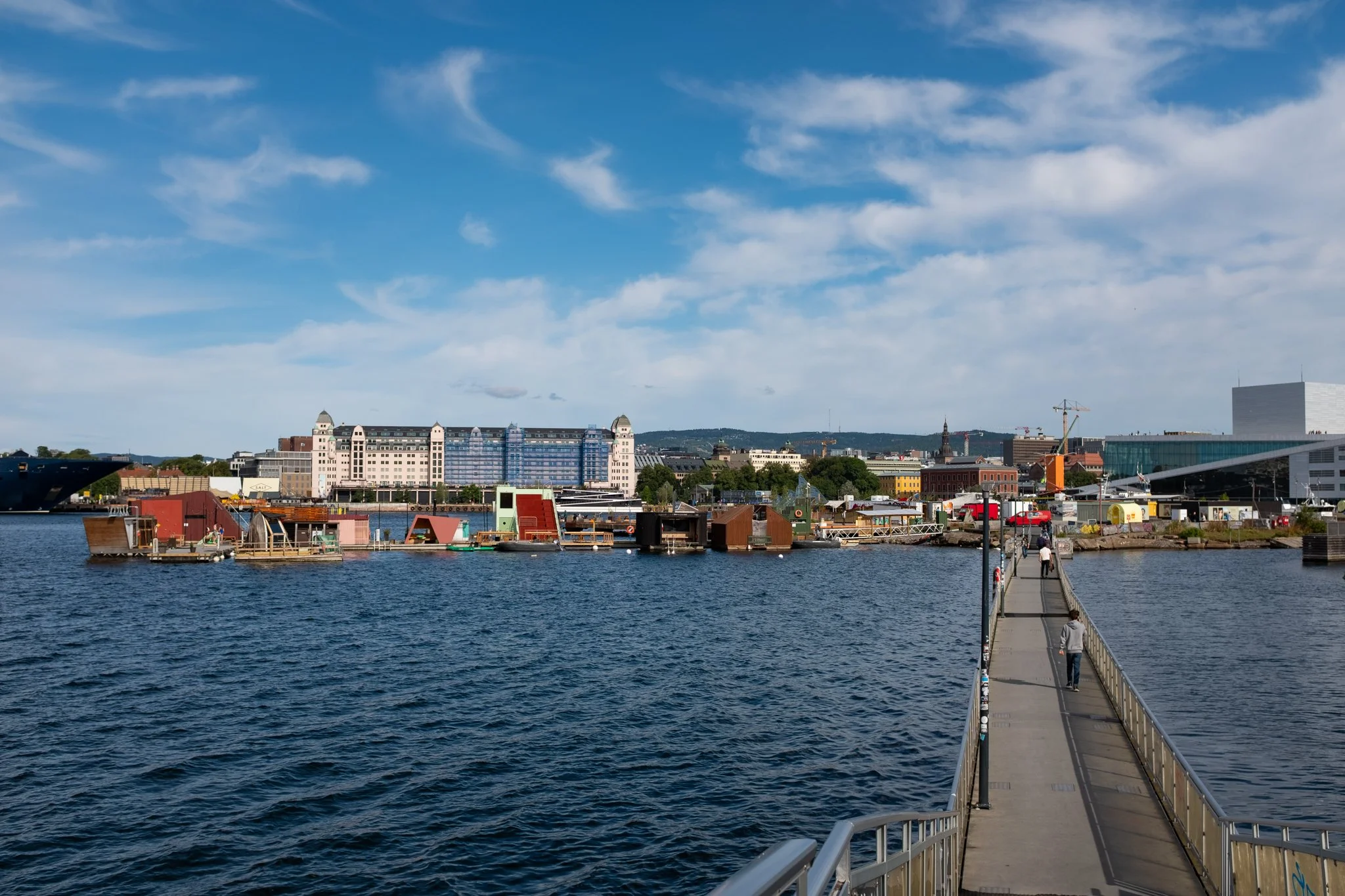
The quirky floating saunas across the bridge at Oslo Badstuforening
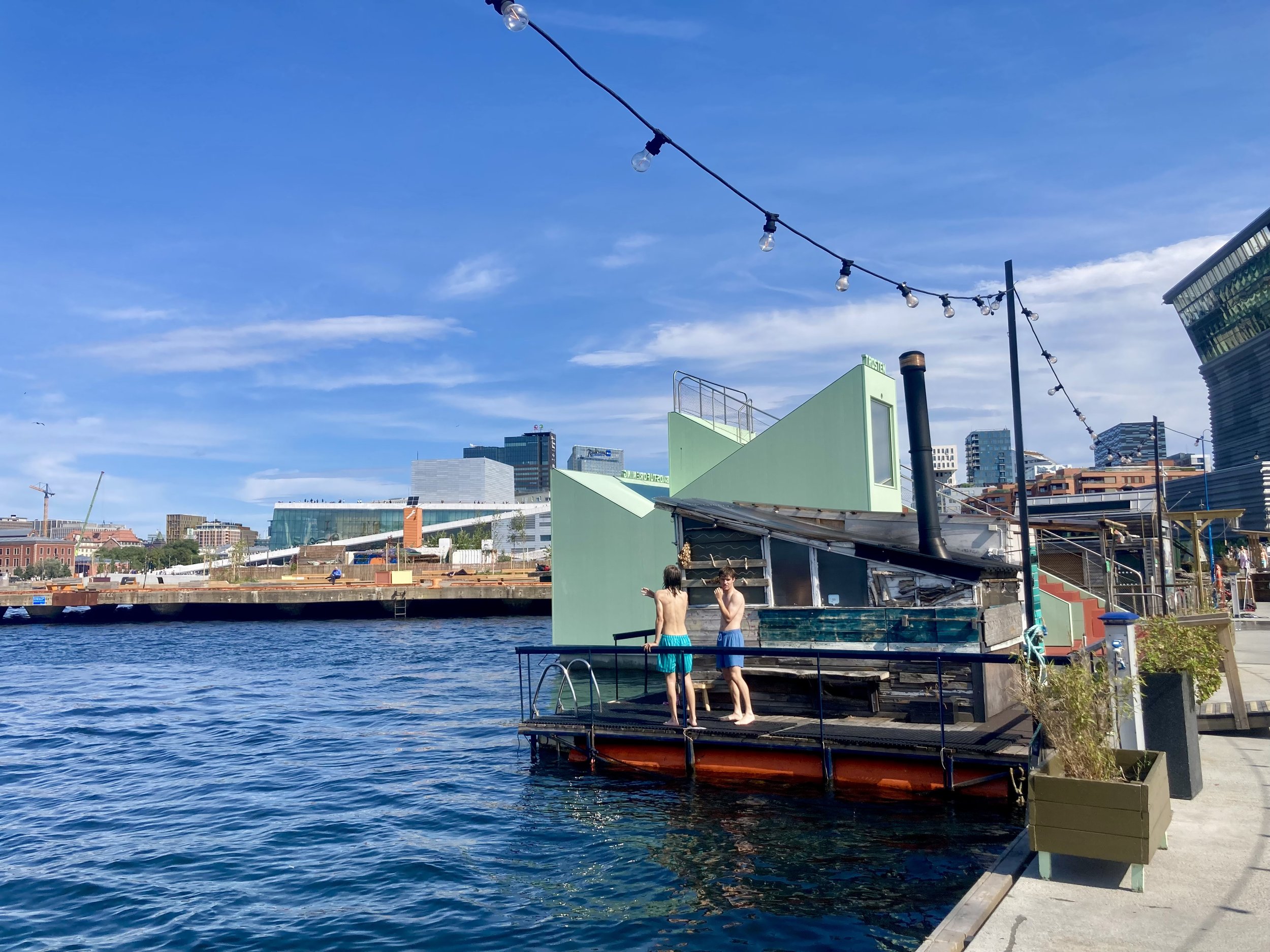
The floating saunas at Oslo Badstuforeng
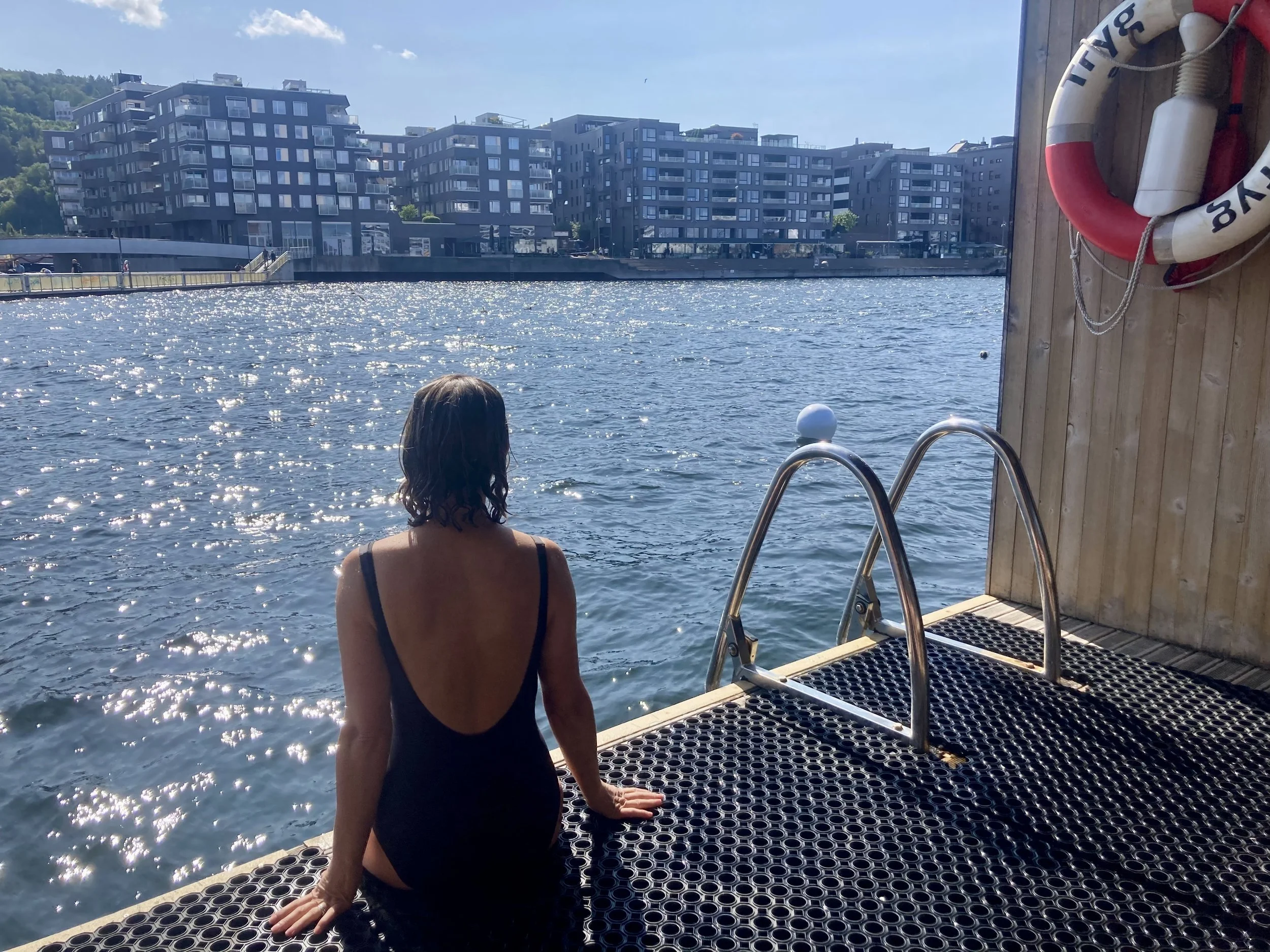
Admiring the view over Bjørvika from ‘favourite’ sauna
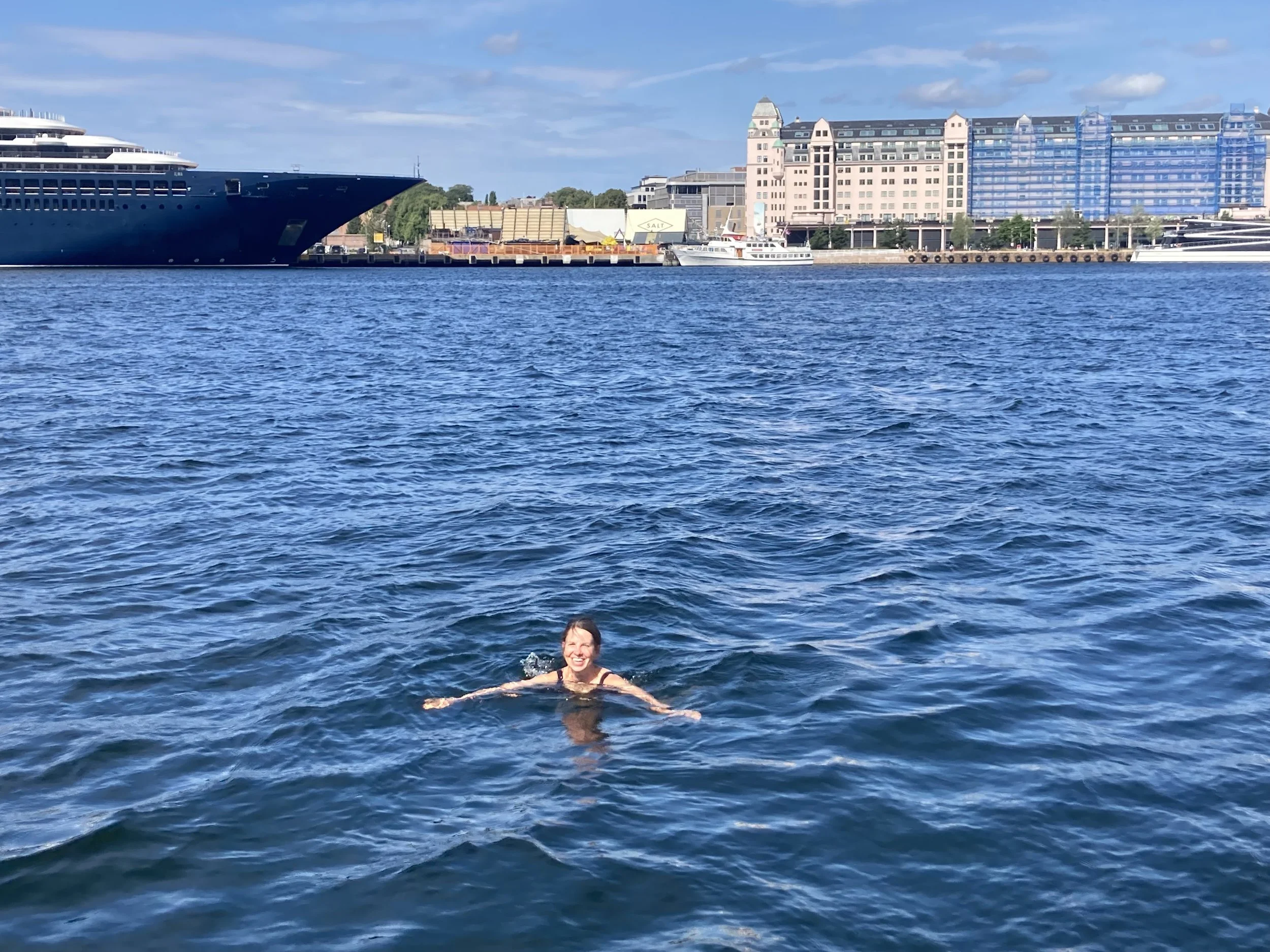
Sauna, swim, sauna, swim - a cooling dip in the fjord
Our next adventure takes us on a stroll along Oslo’s Akerselva River, an 8km-long watercourse that starts life at Maridalsvannet, the city’s largest lake, before flowing through the city and into the Oslofjord. We follow the river upstream, picking up the riverside path from behind the central station. The peaceful tree-fringed trail ribbons through different neighbourhoods, parks and waterfalls, crossing several bridges including one decorated with lovers’ padlocks.
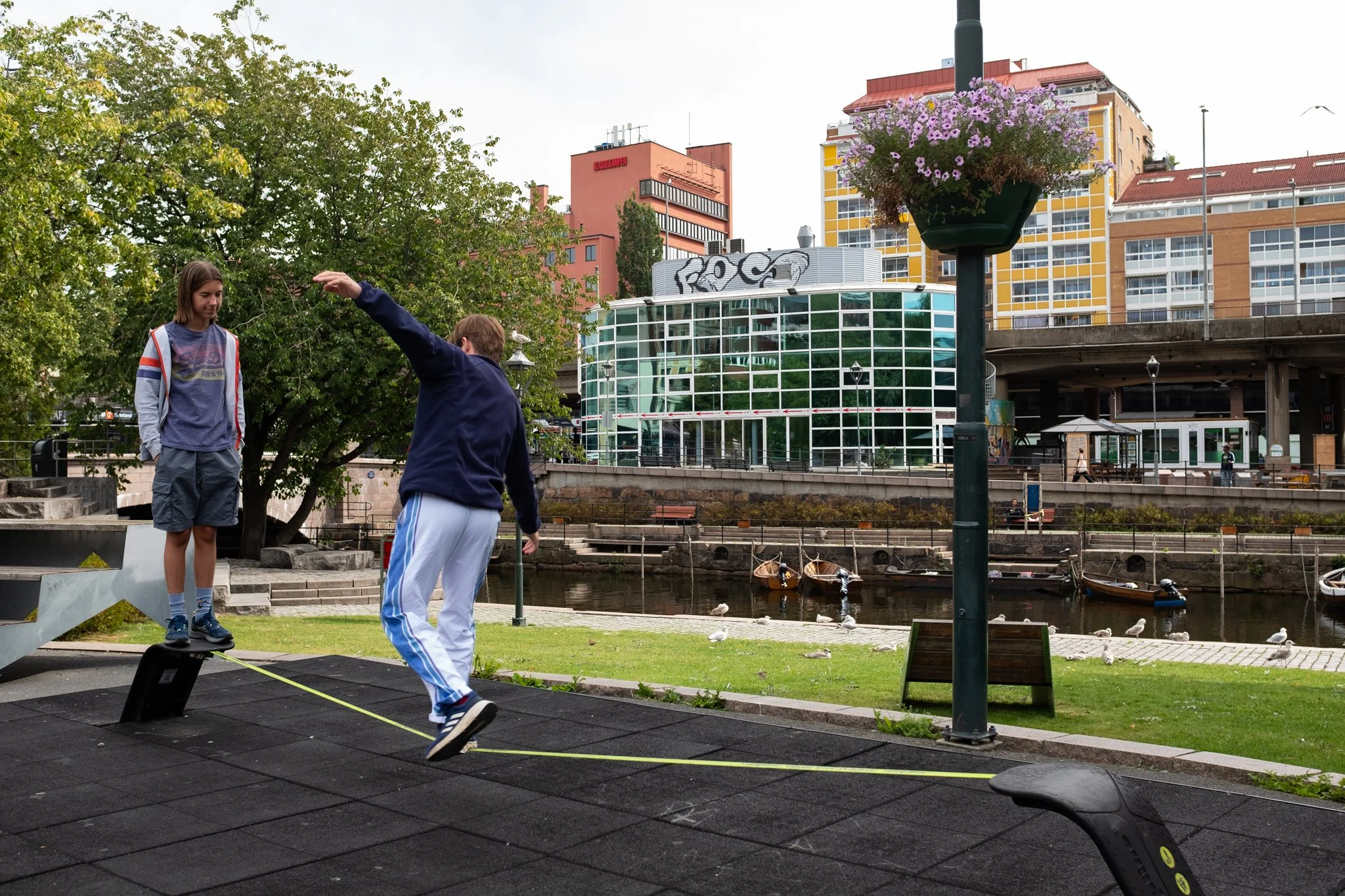
Walking the slacklines along the Akerselva river
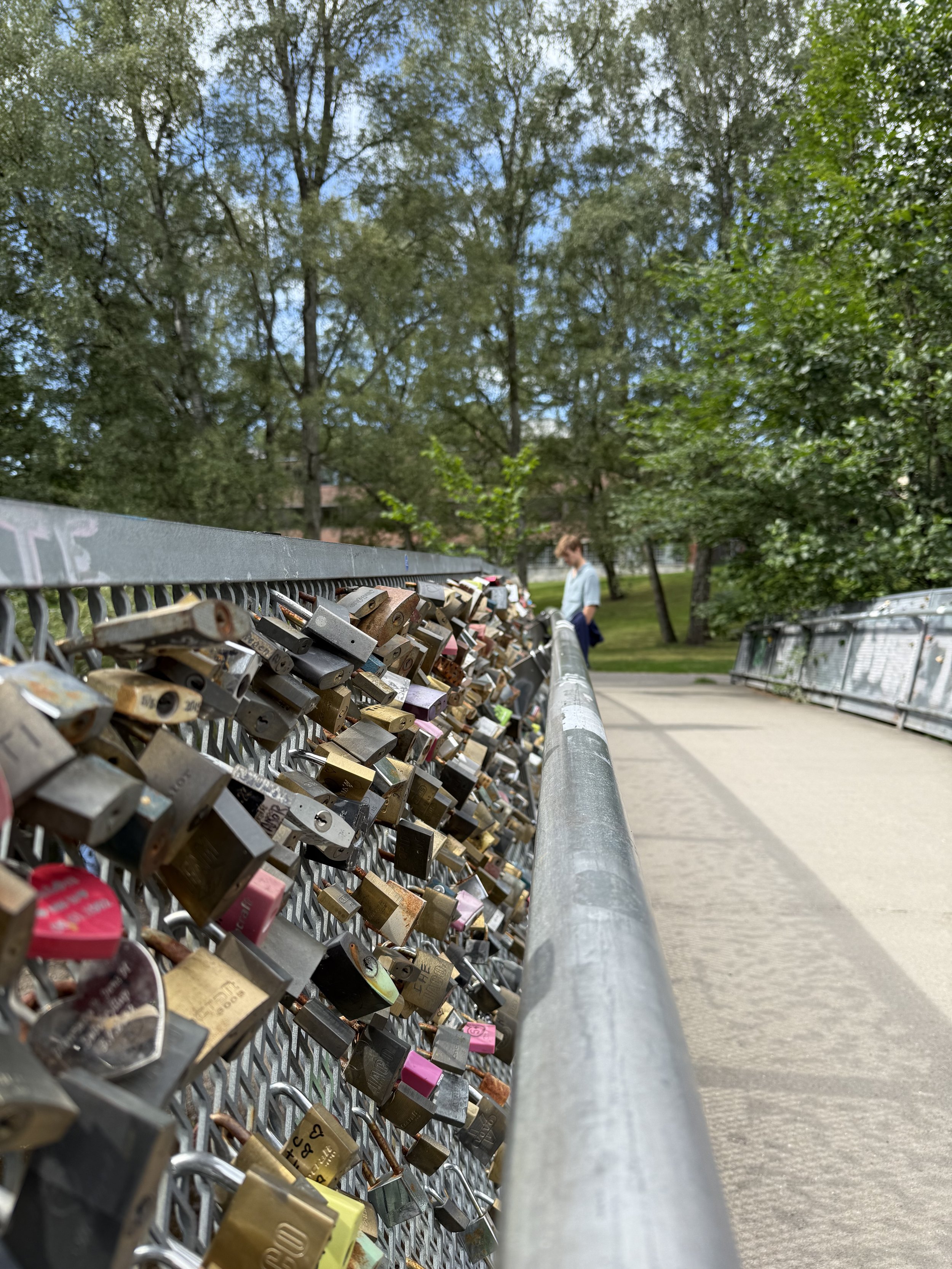
Lovers’ padlocks on a bridge over the Akerselva river
We glimpse hip music clubs and bars through the trees. Sculptures and graffiti-art add colour to the old industrial buildings. We walk as far as Hønse Lovisas House. The tiny red cottage, named after a female character from the books of Oscar Braatan, has a café, which lays claim to the best waffles in town so, of course, we are keen to sample them alongside the classic Scandinavian Skagenröra (Swedish shrimp salad).
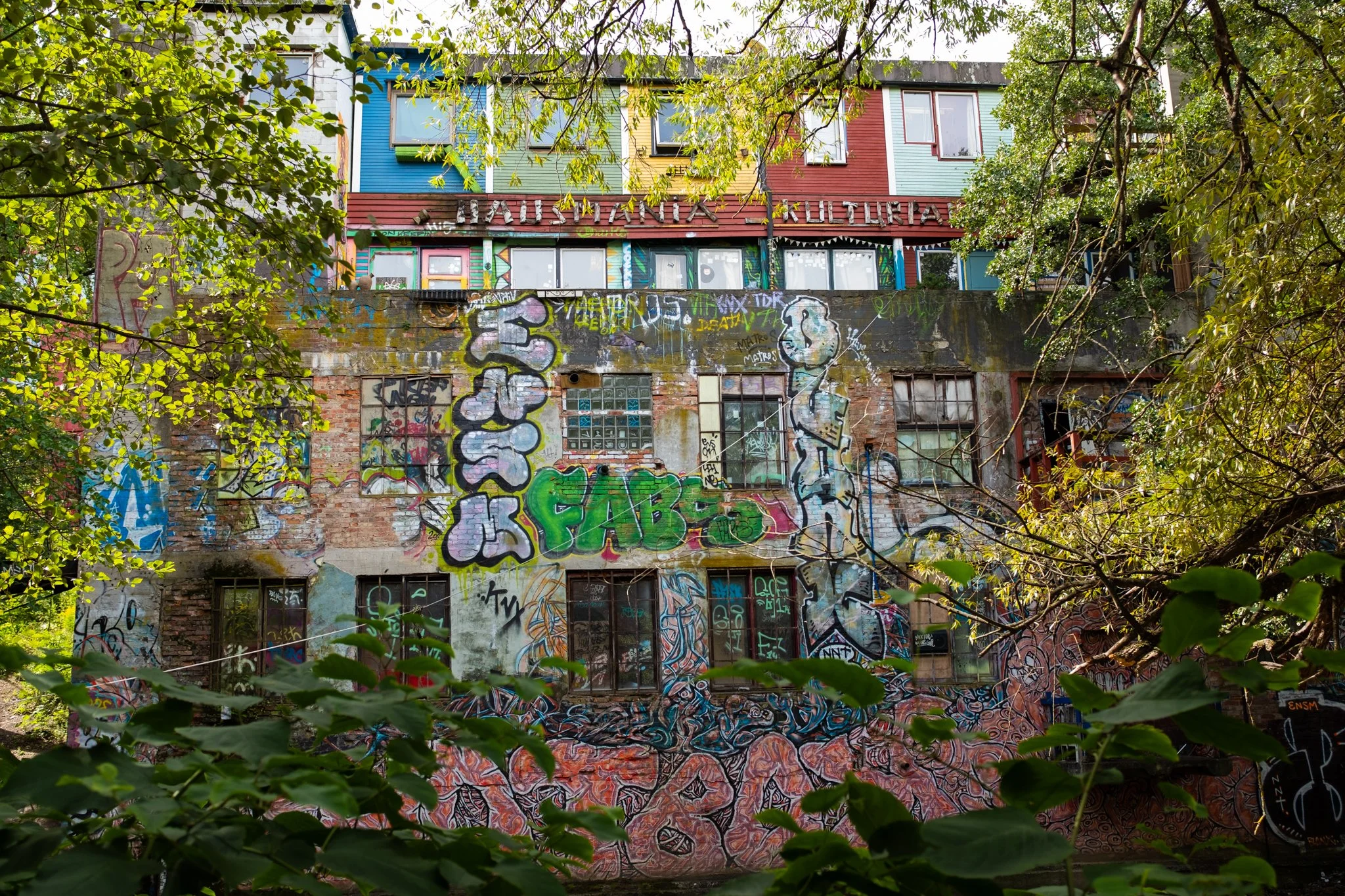
Graffiti-art along the Akerselva river

Honse-Løvisas House and Café
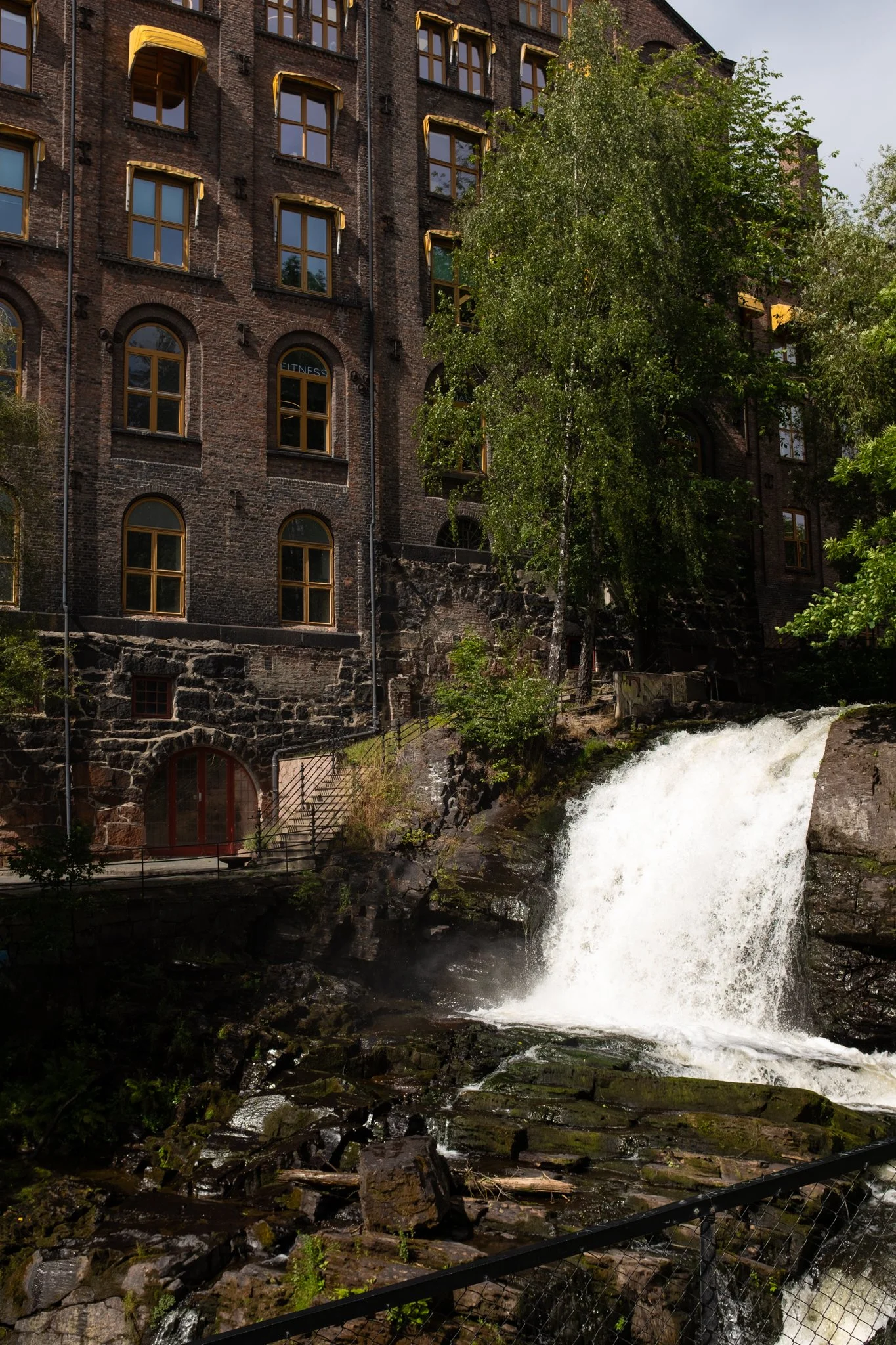
Waterfall at Mølla on the Akerselva River Trail
We wander back through the vibrant Grünnerløkka quarter with its hipster cafés, niche boutiques and vintage stores. This former working-class district is dotted with several small parks where locals bask on lawns beneath the shade of leafy trees. As we stroll through Sofienberg Park, a group of students press political leaflets - and free bottles of water - into our hands.
The next day we take the tram to Ekerbergparken Sculpture Park, an outdoor art gallery perched on a wooded hillside on the eastern side of the city. Here narrow trails wind through the trees to sequestered sculptures. Installations and sculptures by artists including Marina Abramović, Tony Cragg, Sarah Lucas, Niki de Saint-Phalle, Louise Bourgeois and Damian Hirst, are arranged to take advantage of the natural light and the curves of the land. As we climb through the park, there are panoramic views across the city and the Oslofjord. We are captivated by the fairytale Nordic Pixel Forest, a multi-sensory installation by Swiss artist Pipilotti Rist that transforms the woodland into an illuminated grove where thousands of lit shells bathe the trees in light accompanied by an evocative musical composition.
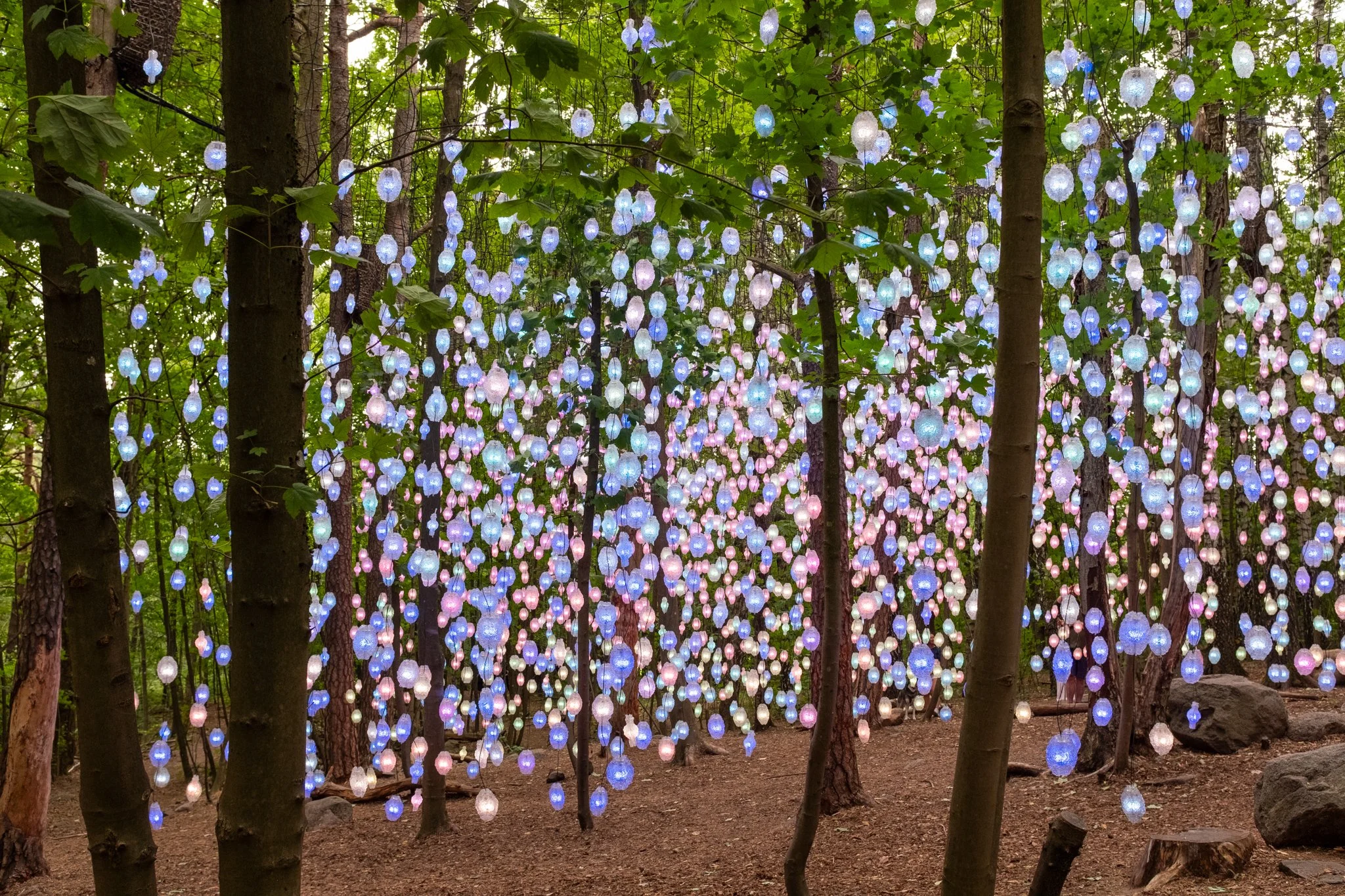
Nordic Pixel Forest by Pipilottii Rist
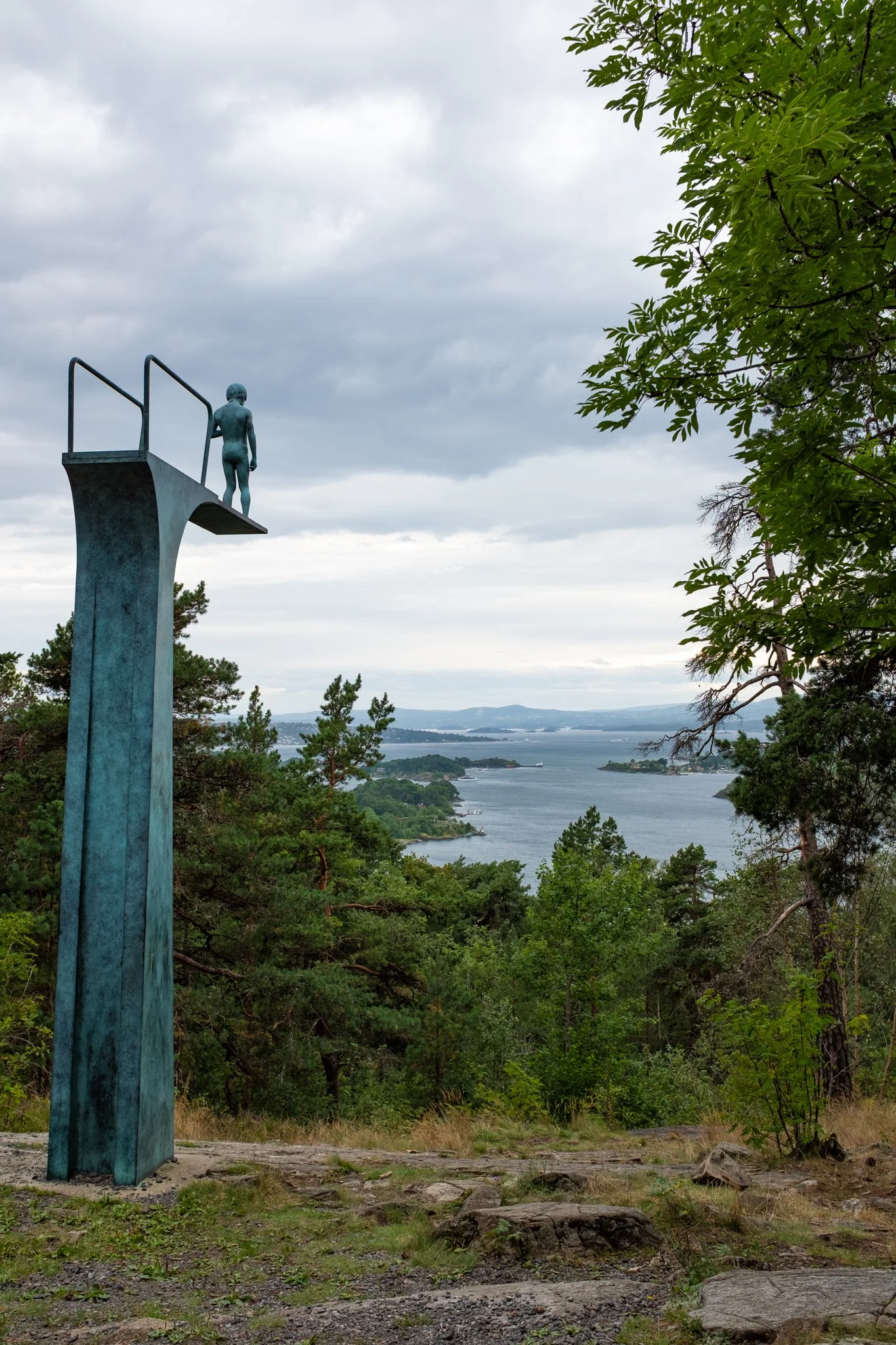
Dilemma by Elmgreen & Dragnet
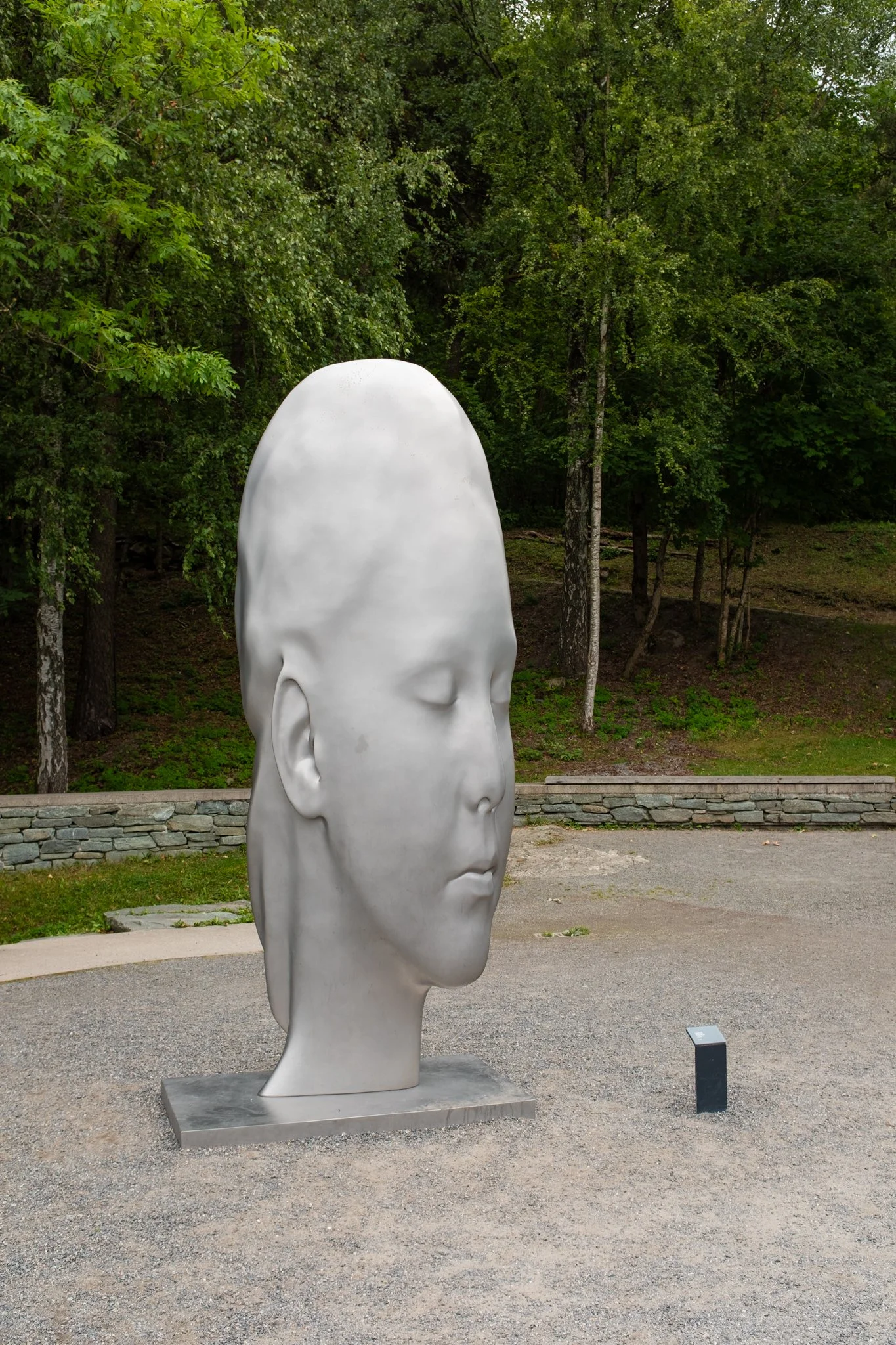
Chloé by Jaume Pensa
This part of Oslo is also celebrated for inspiring the city’s most famous set of drawings and paintings, The Scream or Skrik. In 1892 the artist Edvard Munch took a walk in this park just as the sun was setting when he heard “a great and infamous scream through nature”. In 2013 at the famous viewpoint the Serbian artist, Marina Abramović, conceived her work, The Scream. Together with 270 Oslo residents, she created a homage to Edvard Munch's The Scream. Posed in front of the same landscape that inspired Munch's painting, the crowd screamed out their emotions. Today a simple frame marks the spot where visitors can also cry out across the landscape.
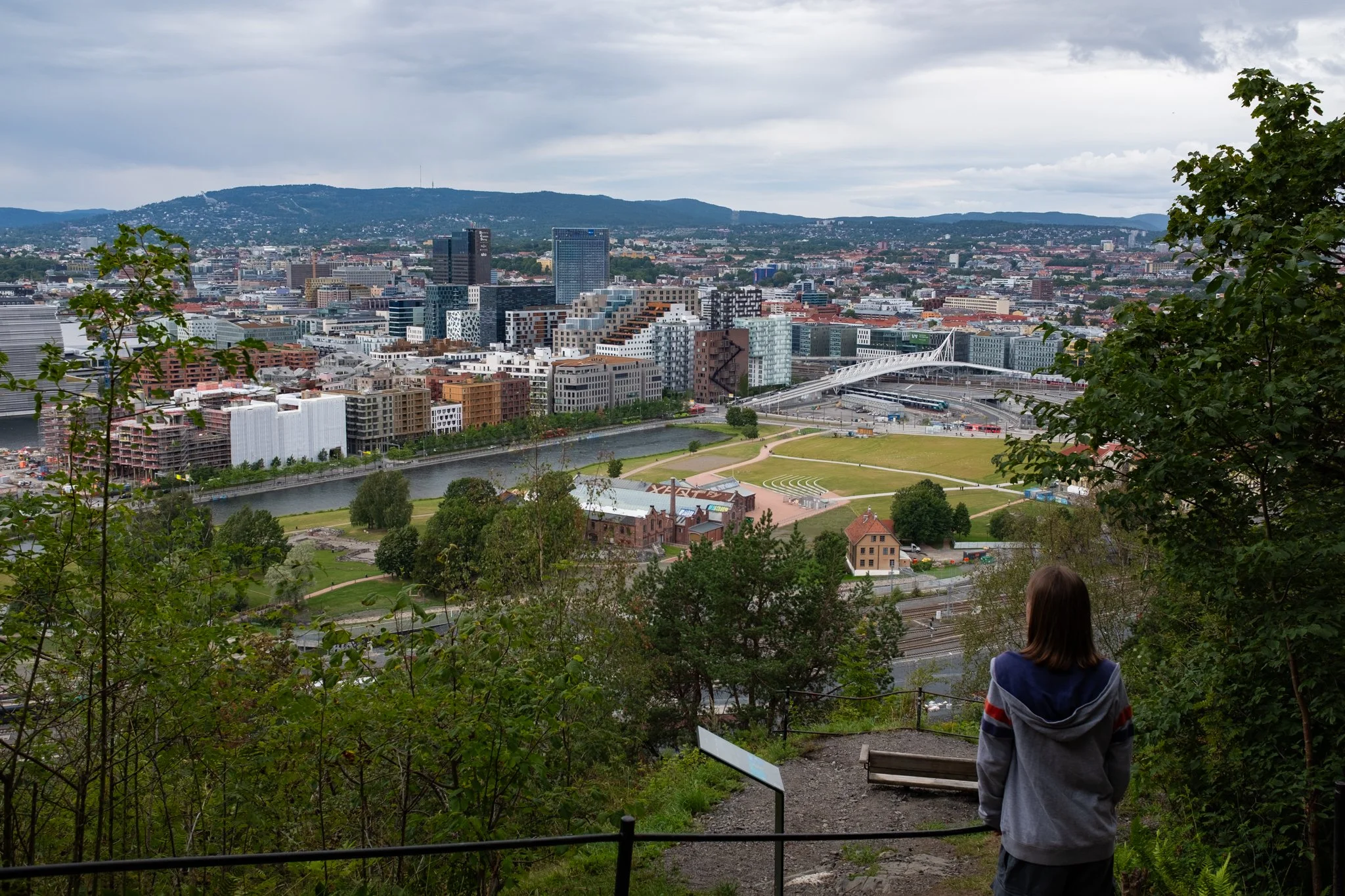
Can you hear "‘The Scream’? Munch viewpoint in Ekerbergenparken
On our penultimate day in Oslo we finally get to see The Scream on our visit to the Munch Museum, housed in one of Bjørvika’s striking new waterfront buildings, designed by Spanish architect Juan Herreros. Emblazoned across the front the word Munch is a punchy slanted moniker that chimes with the glass-fronted top of the building, tilted to look like it is bowing to the city of Oslo,
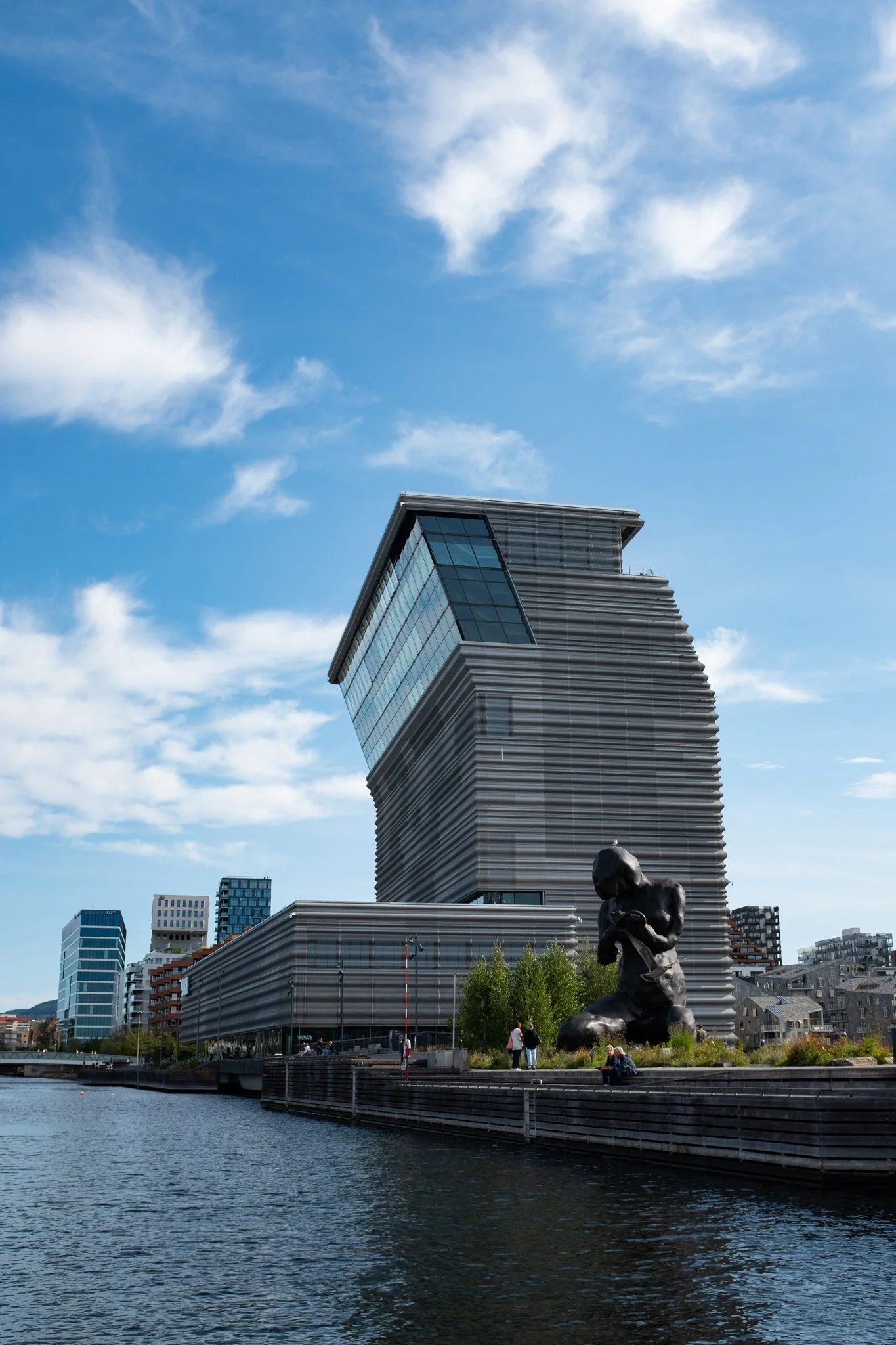
The Munch Museum
Inside is the world’s largest collection of Munch’s work. Three versions of The Scream, a painting, a drawing and a print, are rotated in a dimly-lit room for 30 minutes at a time to preserve their colours. We hang around to see at least one of the paintings and end up viewing two - the painting and the print. It is not easy to appreciate a famous work of art when it has decorated mugs, key rings, t-shirts and even spawned an emoji, but the vibrance of the colours and the swirls of the brushwork are nevertheless striking.
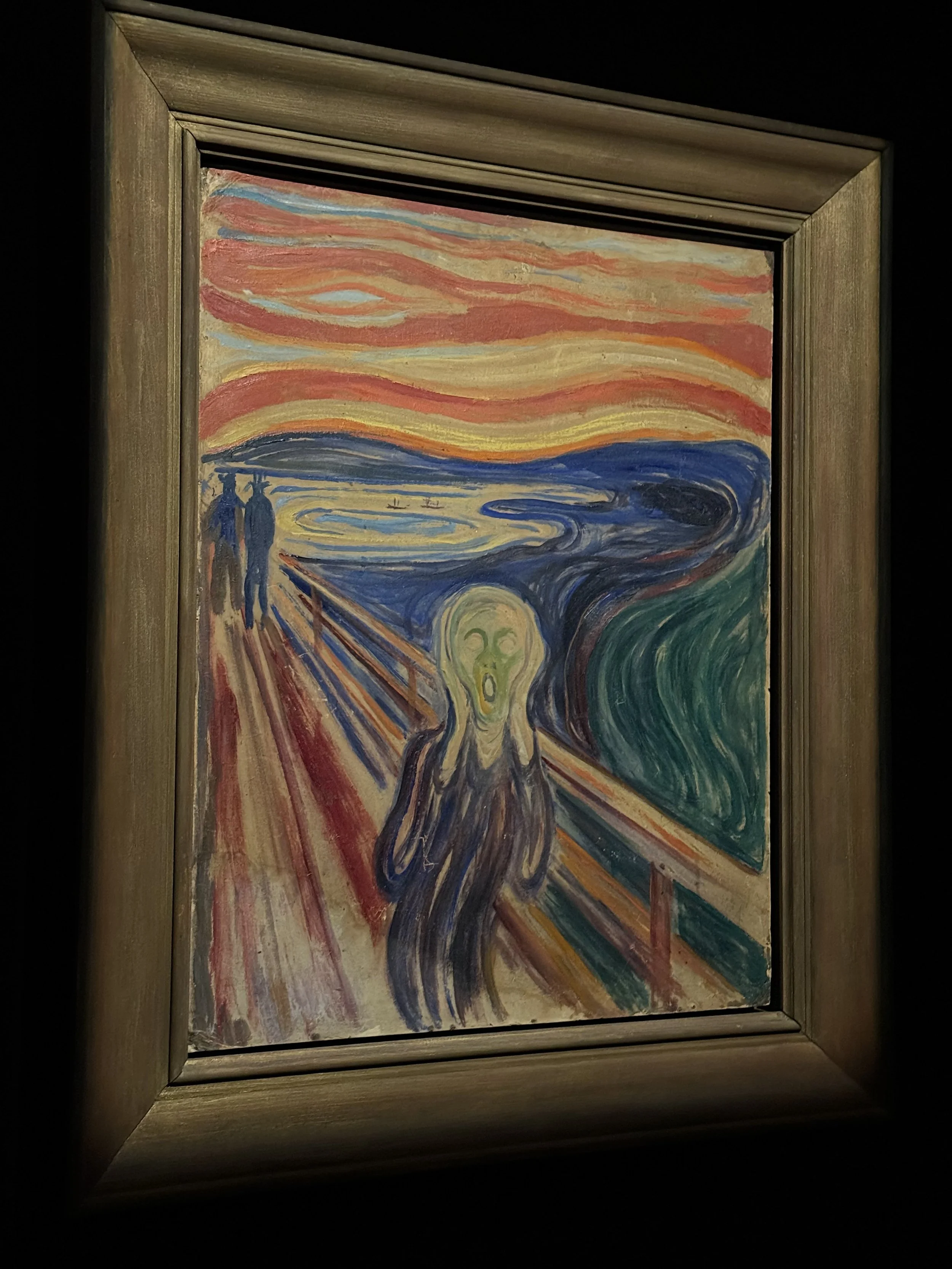
Edvard Munch’s ‘The Scream’
We are all astounded at Munch’s immense productivity. There are hundreds of his works on display and you get an impression of not just how his art developed over the years from a figurative to more abstract style, but also an insight into his own interests and obsessions. The exhibition Lifeblood shows how Munch, the son of a doctor, drew inspiration from his own experiences of sickness and death and the profound changes in medicine during his lifetime. He not only documented his own family’s illnesses, but astonishingly he was also invited to paint complete strangers on their deathbed.
After viewing the galleries, we climb to the museum’s glass viewing platform. The panoramic vista across Oslo and the Bjørvika waterfront from the top is breathtaking.
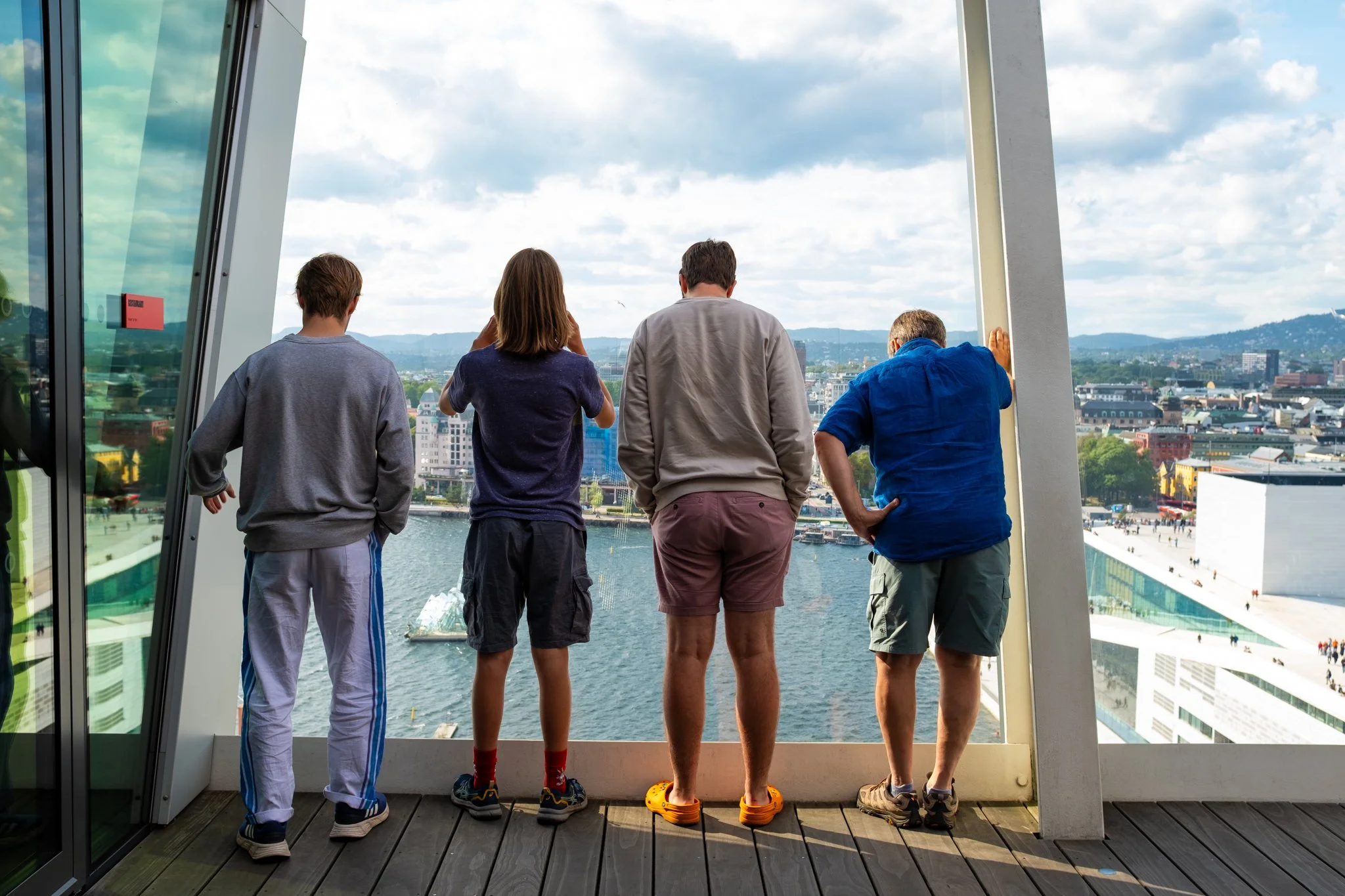
The view over Oslo from the top of the Munch Museum
After spending a week island hopping in the south of Norway, we return to Oslo for one last day before our homeward journey. The fjord and swimming is so much part of Norwegian life, we can’t resist one final dip. This time we see Oslo from a different vantage point, hopping on board one of the ferries to visit Oslo’s fjord islands. We explore Norwegian military history and the Cistercian monastery on tiny Hovedøya, the closest island to the city and only 800 metres across in any direction. We find a spot away from the main beach, clambering down the rocks to cool off in the Oslofjord, bobbing around in the clear water, with views back towards the city.
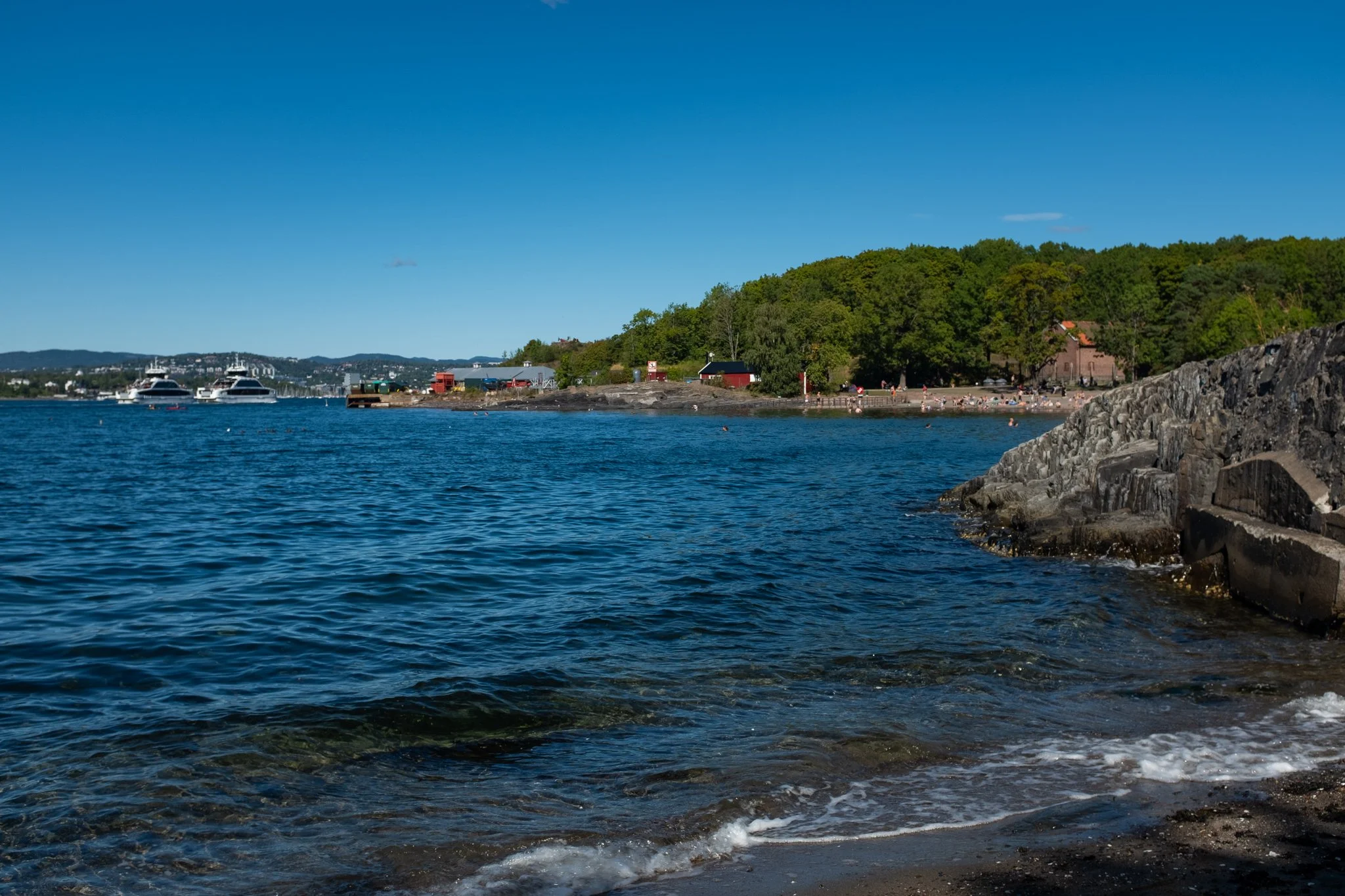
Small beach at Hovedøya
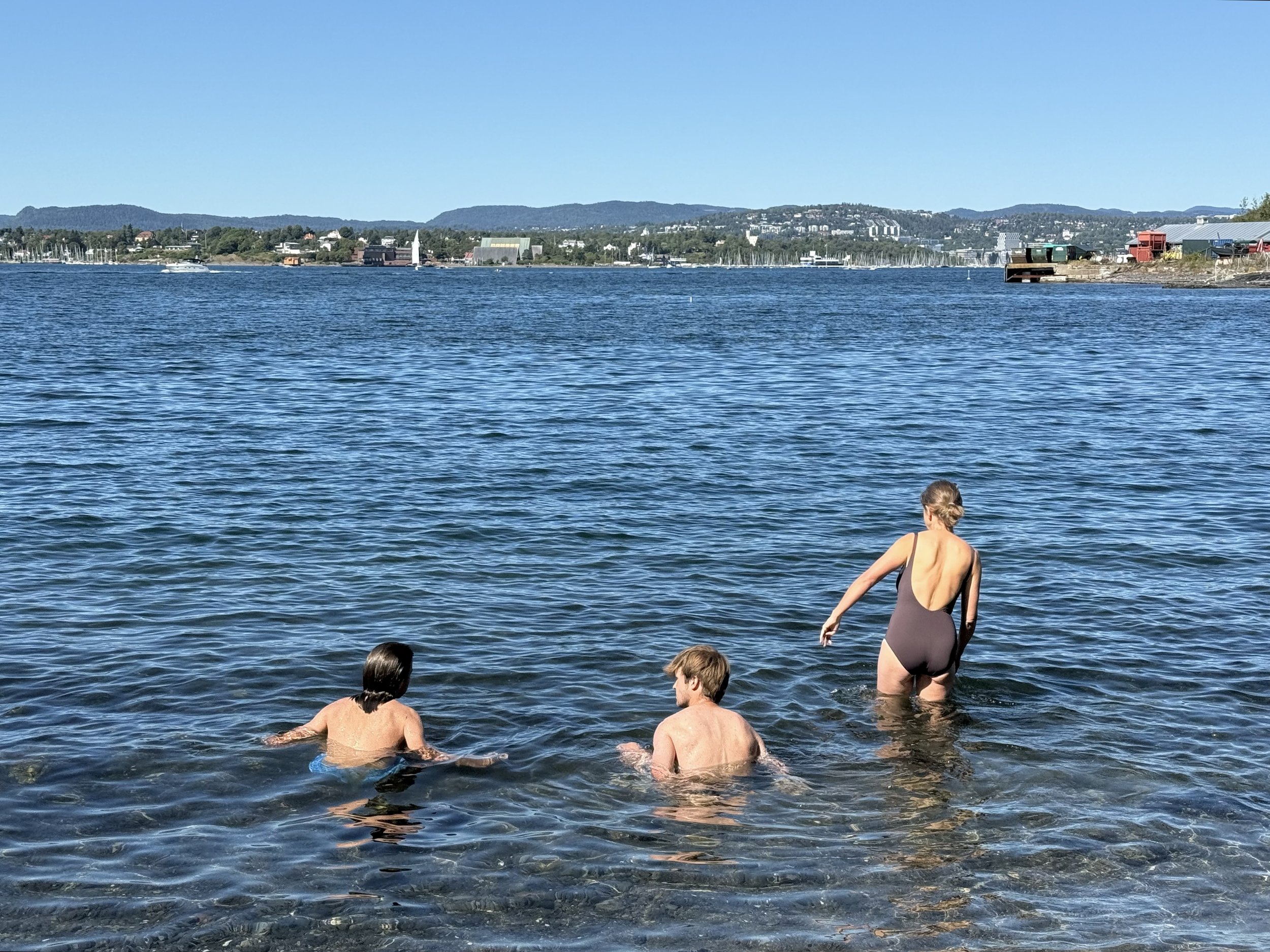
Cooling off in the fjord on Hovedøya island
Afterwards we catch another ferry to Langøyene. This was once two islands until the strait in between was filled in. It is now an activity-packed summer resort for Oslovians, centred on a man-made beach with sand volleyball and football fields. On this baking hot August weekend the beach is thronged, nevertheless it doesn’t deter us.
The city’s ambitious plan to bring the fjord into its heart has been so successfully realised, what better way to end a trip here than with one last swim in the beautiful, clear waters of the Oslofjord.
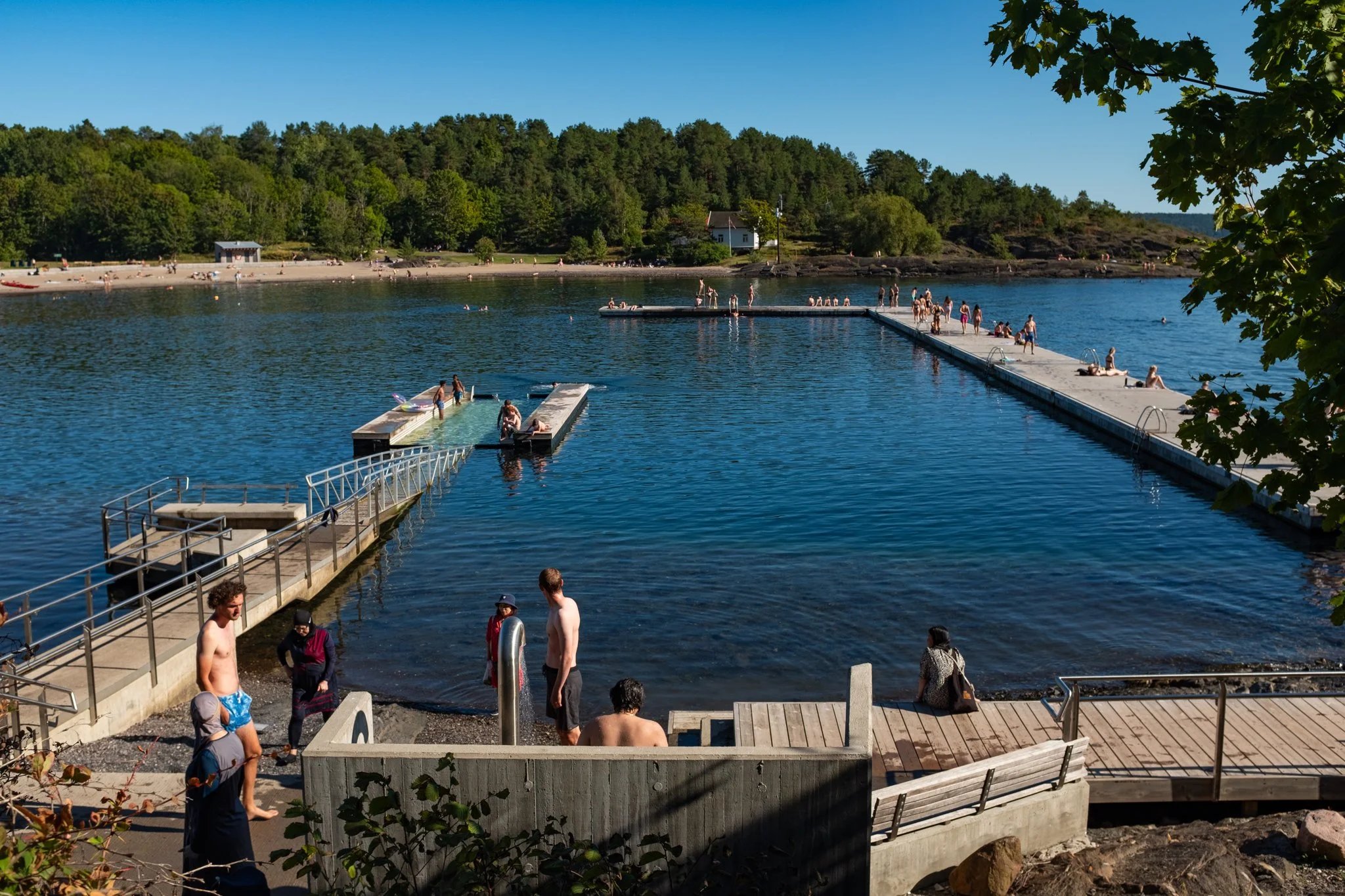
Wooden jetty and bathing beach at Langøyene
